Anne Licata-Solaas
HISTORICAL FICTION, FAITH, AND SPANISH NOVELLAS



Anne Licata-Solaas writes historical fiction, Spanish-language thrillers for the classroom, and stories of faith and pilgrimage. Read more about Anne
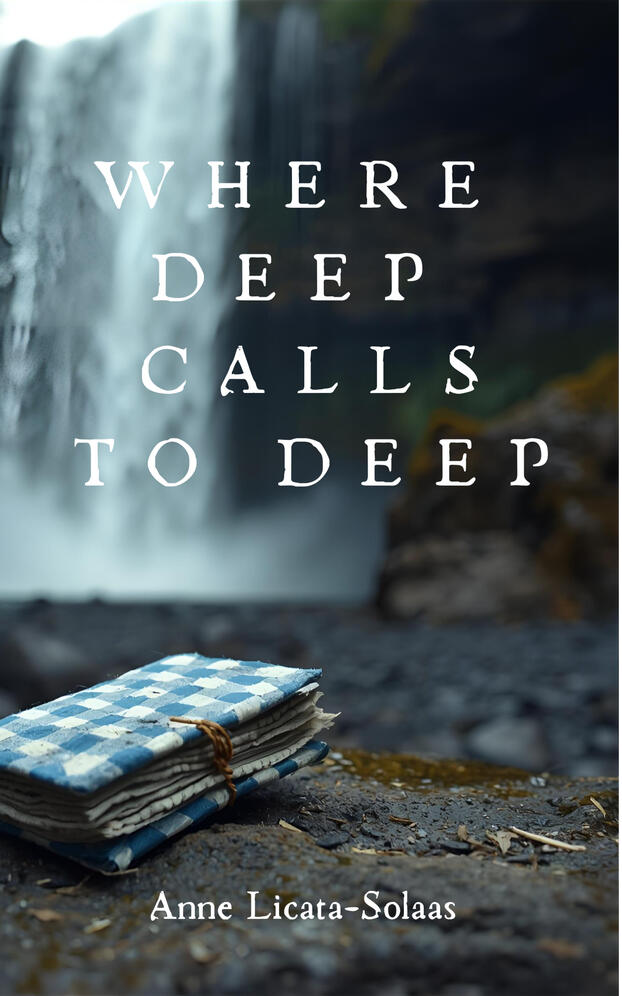
Coming spring 2027 from Elk Lake Publishing: Where Deep Calls to Deep. A young woman walks the Camino looking for answers, but God meets her on the way.
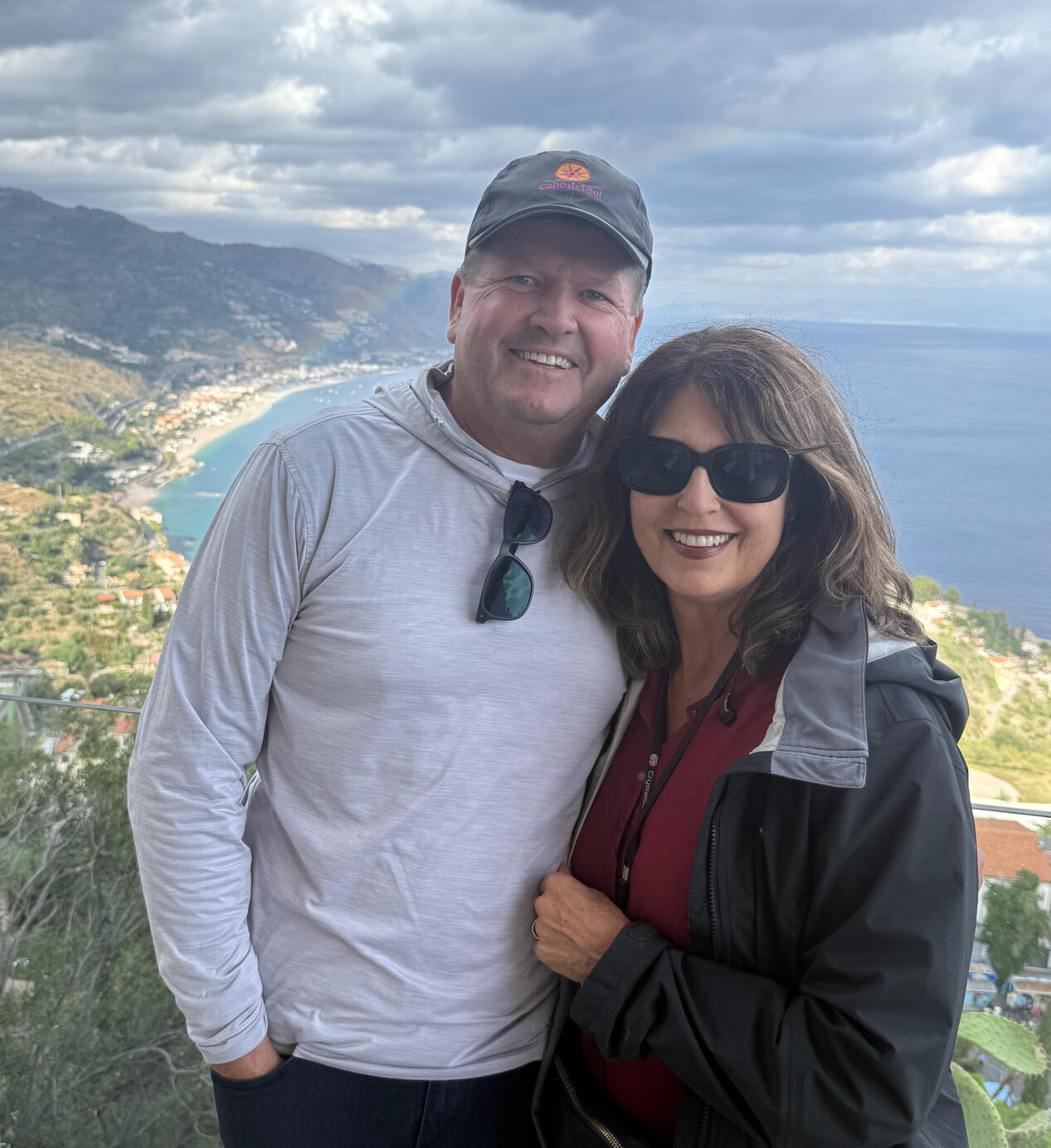
Steve and I in Taormina, Sicily
Anne Licata-Solaas is a former college Spanish professor who writes historical fiction, Spanish-language thrillers for the classroom, and stories of faith and pilgrimage. She lives in Huntington Beach, California, with her husband, near their four adult children.Some of it is fiction. Some of it isn't. All of it comes from paying close attention to the people and places that changed her.Start with The Scent of Lemons, Anne Licata-Solaas's trilogy of historical fiction grounded in something real. Read chapter one free.Teachers and students of Spanish will find Anne's classroom novellas, including Esposados and Un secuestro en México.For personal essays on faith and pilgrimage, subscribe to Anne's monthly Substack, Lessons on the Way.Anne's next novel, Where Deep Calls to Deep, follows a young woman who walks the Camino looking for answers, and God meets her on the way. Coming in spring 2027 from Elk Lake Publishing.

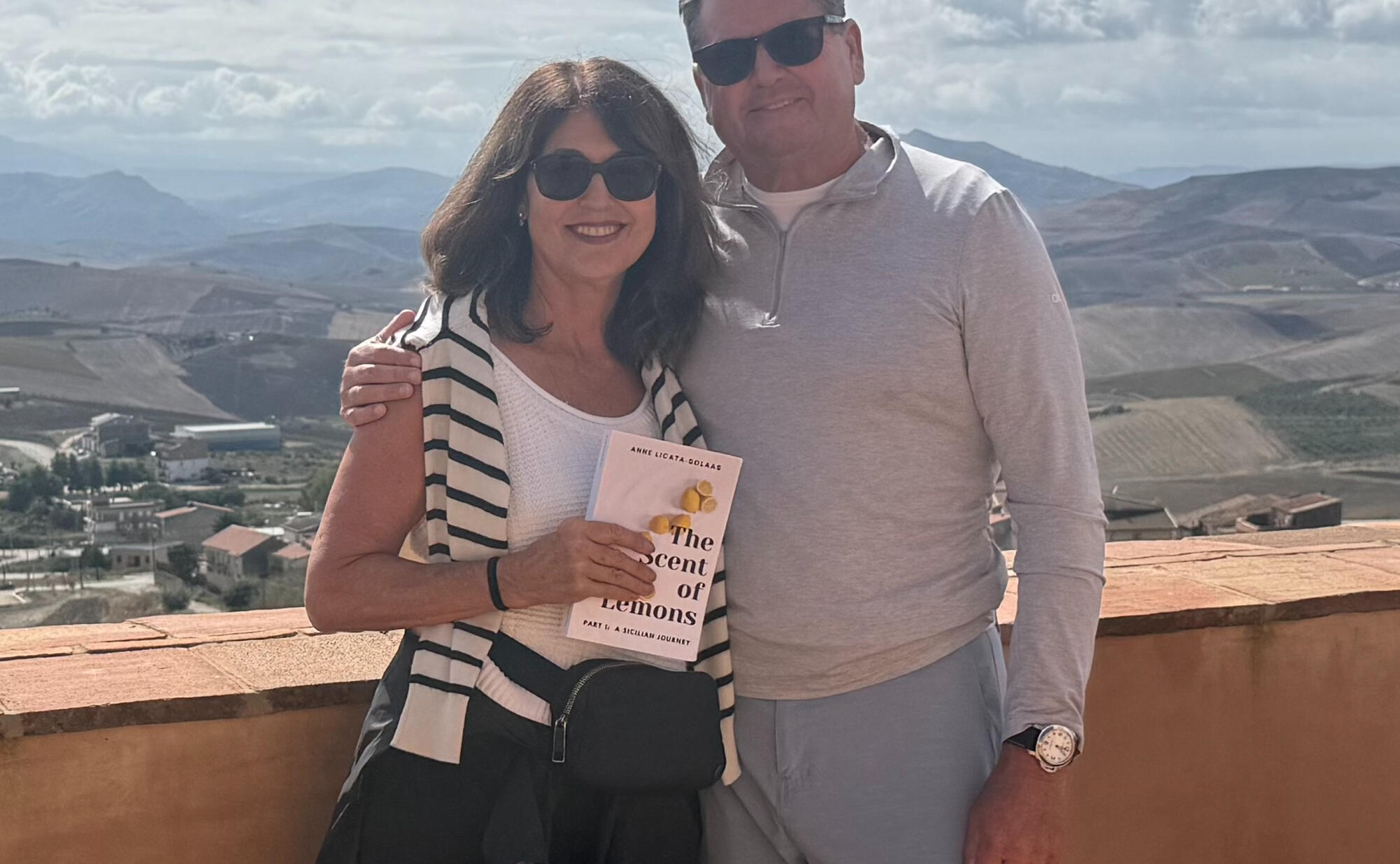
My husband Steve, and I, standing in Camporeale, Sicily, my grandparents home town, book in hand, a hundred years later.
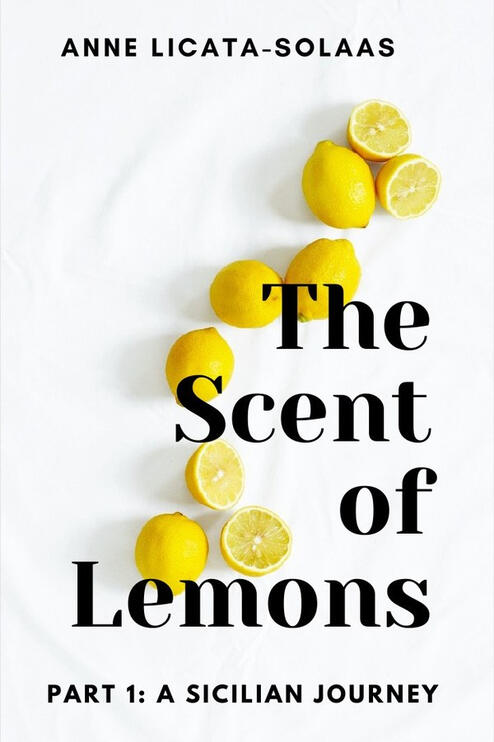
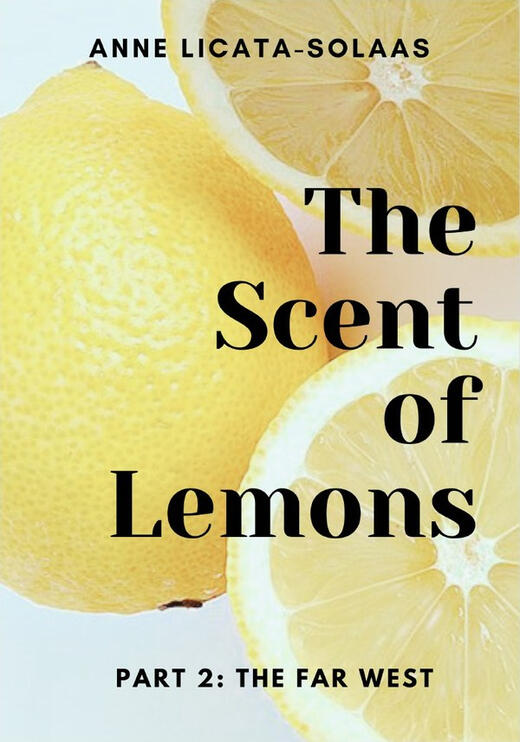
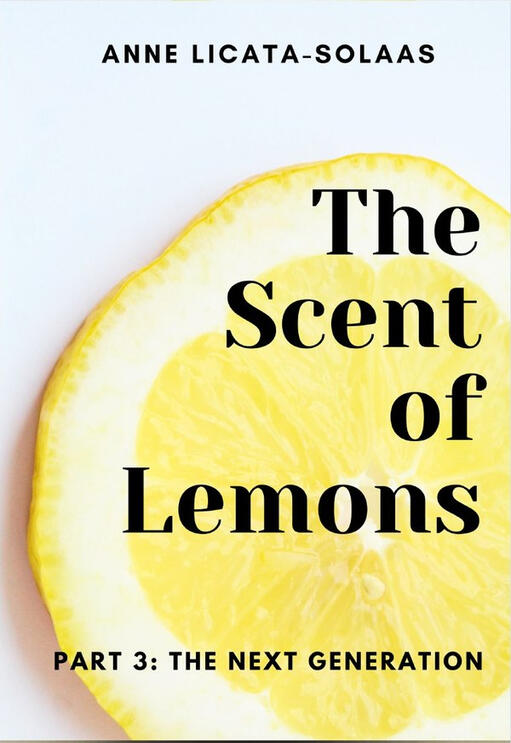
The Scent of Lemons Trilogy
The Scent of Lemons is based on my family's true story, following the Licatas from Sicily in 1897 to the early 2000s through three generations of immigration, survival, and the shadow of organized crime. My grandparents crossed an ocean to build a life, but both died before I was born.
I pieced their story together myself: archives, court records, old newspapers, and family secrets no one wanted to talk about.
The bones are real; the rest, what was said and felt between two people who loved each other and raised ten children, is my best and most loving speculation.Email me through the contact page, and I'll give you a code to purchase Part One, A Sicilian Journey for only $1.99. at https://tinyurl.com/The-Scent-of-Lemons-Part-1.Book clubs welcome! I'm happy to join your discussion in person or on Zoom. Contact me to plan a visit.If you enjoy it, please leave an honest review on Amazon, Goodreads, or your site of choice.
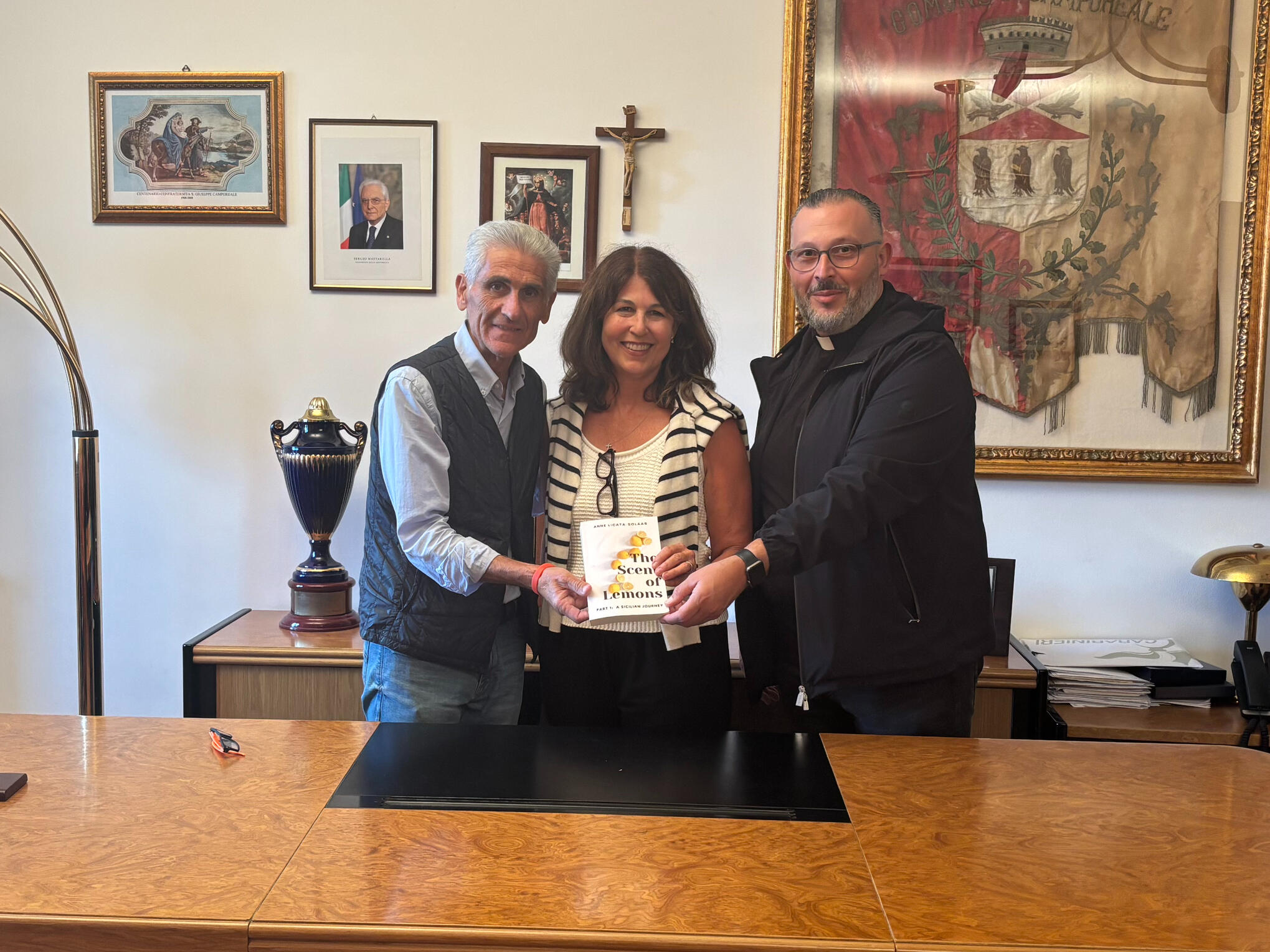
Meeting the mayor and priest of Camporeale.
BOOK CLUB QUESTIONSThe Scent of Lemons trilogyThank you for choosing The Scent of Lemons for your book club! The questions below follow the trilogy's three parts. Use as many or as few as your group likes.Want a printable copy? Enter your email below and I'll send you the PDF.Ordering copies for your group? Contact me.
PART ONE: A SICILIAN JOURNEY1. Do you think immigrants at the turn of the century were better off staying home or taking the risk to go to America? Did your opinion about American immigration change as you read the book?2. Maria wants to learn to read more than anything else. Why was that so important to her? Is there anything you long for but have not yet accomplished?3. How many generations back does your family’s immigration story begin? Do you know what challenges they faced?4. Baldassare slowly realizes that his job with the Abruzzis is calling him to act against his moral sense. Have you ever faced something similar? How did you handle the decision?5. What surprised you most about Italian immigrants from 100 years ago?6. The book shows actual violence within the Italian immigrant community alongside newspaper articles using pseudo-science to claim Italians were inherently criminal. How does a community combat real internal problems without reinforcing outside prejudice? Do you see parallels today?7. Do you have a Father Benedetto in your life? To whom do you go when you need wise counsel?8. Progressive schools a hundred years ago had very specific values they intended to inculcate in the new immigrants. How do the values of those schools compare with schools today? Do you think those values were justified for their time? How about today?9. What was your favorite part of the book? What was your least favorite part? Are there lingering questions from the book you still think about?10. What does the lemon imagery mean to you by the end of the book: survival, home, or something else?11. How does Maria change during the book? Which other characters change or don’t change?12. Signor Pagano and others take advantage of the immigrants’ ignorance and vulnerability. Do you think they are evil or merely taking advantage of an economic opportunity? Do similar situations exist today with immigrants or others?13. Was Antonio telling the truth about his difficulties in New Orleans? What changed him from the idealistic father Maria remembers at the beginning of the novel to the jaded gambler in the end? Does hardship make you stronger or beat you down?14. Maria kept a secret from her parents. Have you ever kept a secret from someone you love? How did it affect your relationship with them?15. Maria feels betrayed by her parents’ behavior. How do people deal with disappointment from a loved one?16. Nicolò is charming even as he becomes increasingly complicit in violence. What does the book suggest about how good people get drawn into corrupt systems?17. Maria is afraid to commit to Baldassare because of what she witnessed in her parents’ relationship. How have past relationships or past generations affected you?18. Would you consider immigrating to another country? Where and for what purpose?PART TWO: THE FAR WEST1. The American perception of immigrants plays a key role in this novel. What are some of the specific challenges faced by immigrants in the early twentieth century, as depicted in the book? How do these challenges resonate with contemporary issues?2. Maria and Lucia’s friendship changes over the course of the novel. Do you believe some friendships are for a time or are forever?3. Baldassare and Nick take drastically different paths in America. What do you think influenced their choices, and how do these choices reflect the immigrant experience?4. Nick’s involvement with the mafia adds complexity to the story. How is organized crime portrayed, and what does it reveal about the era’s societal issues?5. How was the Spanish flu different or similar to the Covid-19 pandemic? How were they handled similarly or differently?6. What did you know about Prohibition before reading this book? Did it surprise you that the mafia was so integral to bootlegging?7. Maria was in her fifties when she learned to read. Why did Maria hide her learning to read? Can you identify any goals you are afraid to share?8. Did your family fight in World War II? What stories can you share about them?9. Most of us have heard about the Japanese internment camps during World War II. Were you surprised that the Italians and Germans were interned as well?10. What do you know about WWII activity around Los Angeles or California?11. Why does Baldassare take Nick’s offer to open the liquor store? Do you see that as a compromise or a practical decision?12. What does the Far West symbolize?13. How do the relationships within the Licata family evolve in this part of the saga? Are there any pivotal moments that shift family dynamics?14. Loyalty is a recurring theme. How do different characters demonstrate loyalty, and what are the consequences of their actions?15. How do the characters maintain their Sicilian heritage while adapting to American society? Are there moments where their cultural identity is challenged or reinforced?16. The narrative spans two World Wars. How do these global events affect the Licata family on a personal level?17. Characters often face moral dilemmas. Discuss a situation where a character’s decision had significant ethical implications.18. How are women portrayed in the story? What roles do they play within the family and the broader community?19. The title suggests a symbolic meaning. What do lemons represent in the context of the story, and how does this symbolism enhance the narrative?20. Is Josephine believable? Is it easy to deceive oneself? How do we deceive ourselves? Why do we deceive ourselves?21. Do you find Nick likable? Why or why not?22. Grace Tocco and Carlo seem to get involved with the amici by default. Are some destinies fixed or are they always manipulable? What makes the difference?23. After reading Part 2, what are your predictions for the characters in the final installment? What unresolved questions are you eager to see addressed?PART THREE: THE NEXT GENERATION1. This novel explores the theme of family loyalty through characters like Joe, who struggles with his uncle Nick’s influence, and Carlo, who desperately seeks acceptance from his in-laws. How do you interpret the novel’s perspective on family loyalty? Is Nick’s phrase “family is family” portrayed as wise or destructive?2. Discuss how alcohol and addiction shape the trajectories of several characters, particularly Joe and Mary. How does the novel portray their journey with alcoholism, and what insights does it offer about addiction and recovery?3. Carlo represents someone who consistently makes choices that lead to his own destruction. What factors do you think contributed most to his downfall? Were there turning points where you felt he could have changed his path? Carlo’s request to “die like a man” is met with laughter rather than argument. What does the novel suggest about the difference between the death he wanted and the death he got?4. The story spans multiple decades of Italian-American experience, from immigration challenges to assimilation. What aspects of the Italian-American experience depicted in the novel surprised or enlightened you?5. The lemon motif appears throughout the story - in family traditions, Joan’s career, and even in the title. What symbolic significance do you think lemons hold in this narrative?6. Several characters grapple with questions of identity and belonging. How do characters like Carlo, Joan, and Mary attempt to define themselves both within and outside of their family legacy?7. “When Time Runs Out” and other chapters explore how characters confront mortality and the limited nature of time. How do different characters respond to this realization, and what does the novel suggest about making peace with our finite lives?8. How does the novel portray the intersection of organized crime with legitimate society? Consider how characters like Nick operate in both worlds and how institutions respond to this reality.9. Forgiveness emerges as a central theme, particularly in Joe’s journey. What perspective does the novel offer on forgiveness—both of others and of oneself? Is forgiveness portrayed as conditional or unconditional?10. Women in the novel (Mary, Grace/Josephine, Joan) face particular challenges related to the patriarchal family structure. Grace’s transformation into Josephine required leaving her name, her community, and her family behind entirely. Do you see her choice as an escape, a rebirth, or both?11. The novel explores different types of power: familial, criminal, financial, and personal. Which characters seem to exercise the most authentic power, and how is true power defined in the world of the novel?12. Several characters experience profound transformation (Mary’s sobriety, Joe’s redemption, Grace becoming Josephine). Which character’s transformation did you find most compelling or authentic, and why?13. Religious faith appears throughout the novel in varying forms. How do characters like Dennis, Joe, and Mary relate to their Catholic faith, and what role does religion play in their moral decisions?14. The epilogue shows Joan discovering her family history and deciding to preserve it through storytelling. How does this final chapter shift the perspective on everything that came before it? What does it suggest about the importance of understanding our family histories?15. The novel presents a complicated picture of the American Dream through this immigrant family’s multi-generational journey. By the story’s end, would you say the characters have achieved the American Dream? How has their understanding of success and happiness evolved across generations?
Spanish novellas for Spanish learners
level C1
You know the problem: B2/C1 readings are either too simple to engage students or too dense to use in the time you have. I spent ten years teaching college and AP/IB Spanish, hunting for something students actually want to finish.Un secuestro en México drops readers into a kidnapping plot set against the streets of Mexico City. Fast-paced enough to keep advanced students turning pages, with audio narration available.Esposados is a psychological thriller set in San Salvador, weaving present-day gang conflict into El Salvador's complicated history. Comprehensive student and teacher guides are included, so you don't have to build support materials from scratch.Both were written specifically for AP, IB, and college-level Spanish 201 classrooms: authentic stories that teach language, culture, and history.

Deep Series Spring 2027
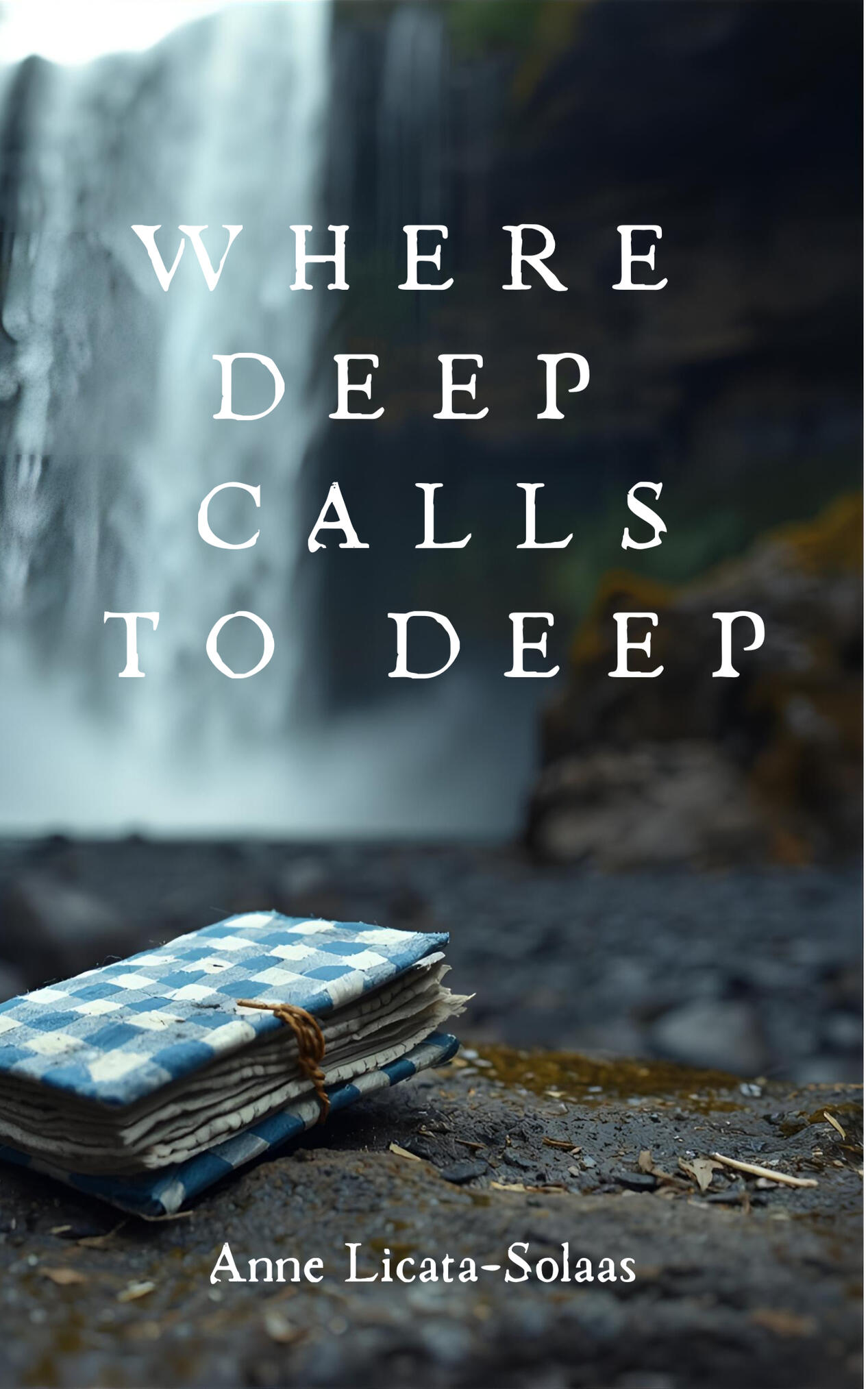
Where Deep Calls to Deep
Sofia Russo arrives at Hills College four years after her sister Giulia's death, looking for answers her grieving parents can't give her. Between distant professors and a boyfriend who mirrors back exactly what she wants to see, she's more lost than when she started.When her boyfriend chooses a Paris internship over walking the Camino de Santiago with her, Sofia makes the pilgrimage alone. She isn't looking for God. She finds Him anyway.Back at Hills, Giulia's hidden diary unravels everything Sofia thought she knew about her sister, and about herself. She runs from what she found on the Camino, straight back into the life she knows how to perform. But grief and doubt have a way of catching up.Where Deep Calls to Deep is a story about what happens when certainty runs out, and faith has to start somewhere else.
Coming in Spring 2027 with Elk Lake Publishing
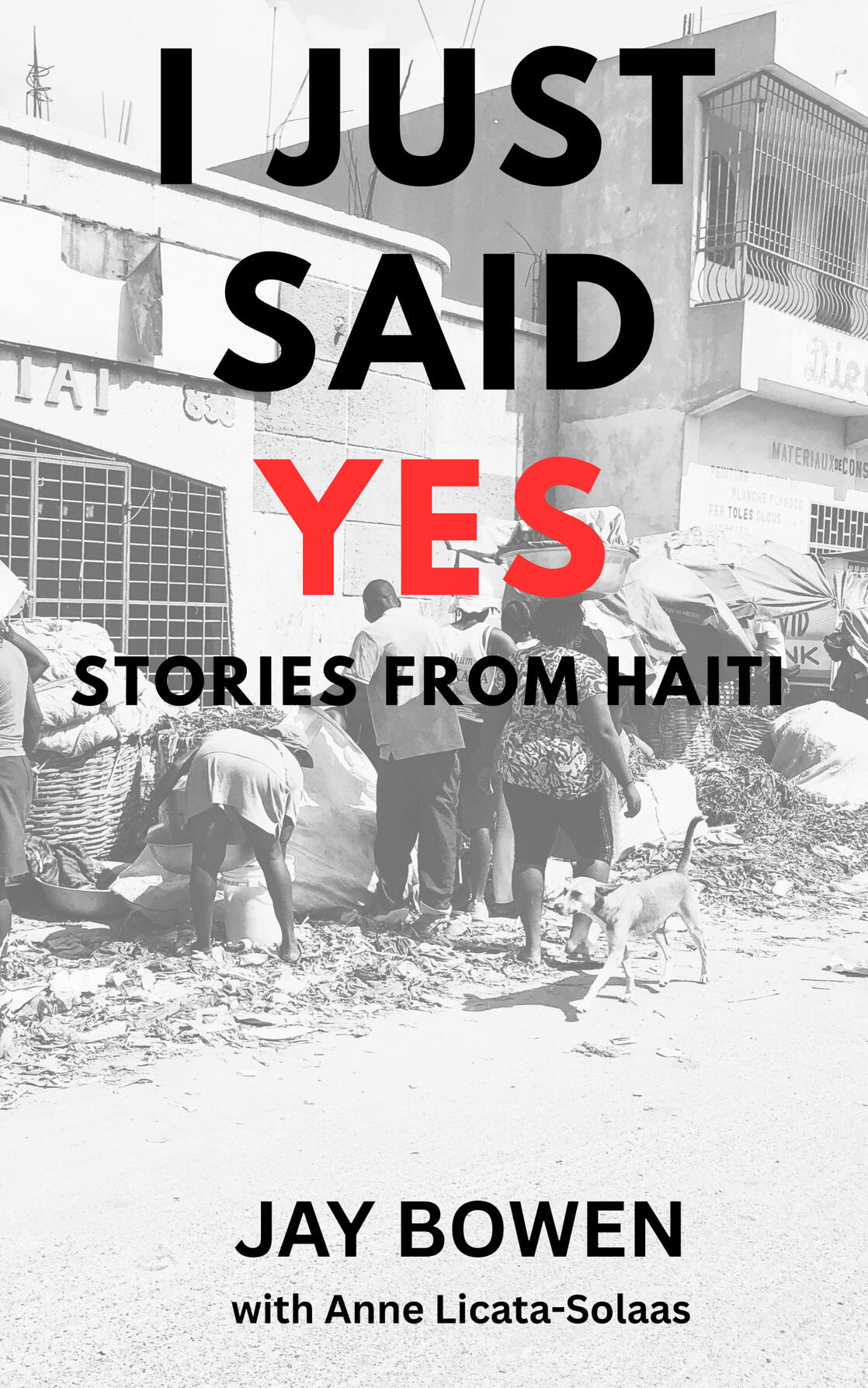
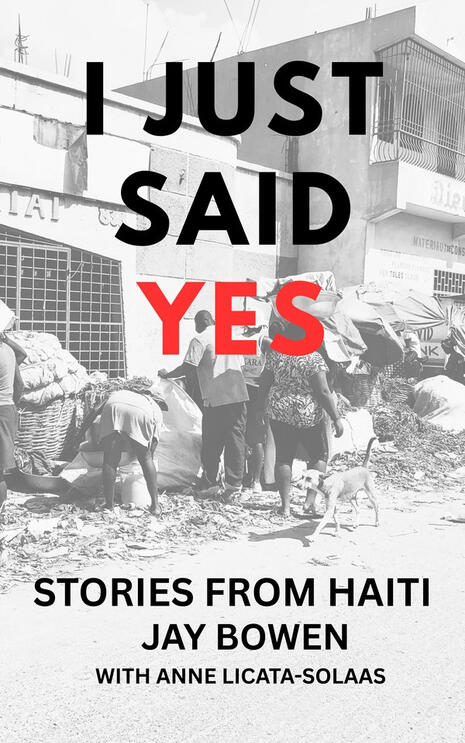
I JUST SAID YES: STORIES FROM HAITI
Jay Bowen wasn't a pastor or a missionary. He was a general contractor from Southern California who watched the Haiti earthquake coverage on his phone and couldn't look away.What followed was more than a decade of saying yes to disaster zones, impossible odds, and a Haitian pastor named Rosinel who became his closest friend and partner in ministry. Through gang violence, poverty, and disaster, Jay watched something he didn't expect: the Haitians he met didn't break. They sang. They prayed. They planted churches. Their faith quietly dismantled every assumption he'd brought with him.I Just Said Yes: Stories from Haiti is a raw account of what happens when an ordinary person shows up and discovers that God was already there.
Contact